
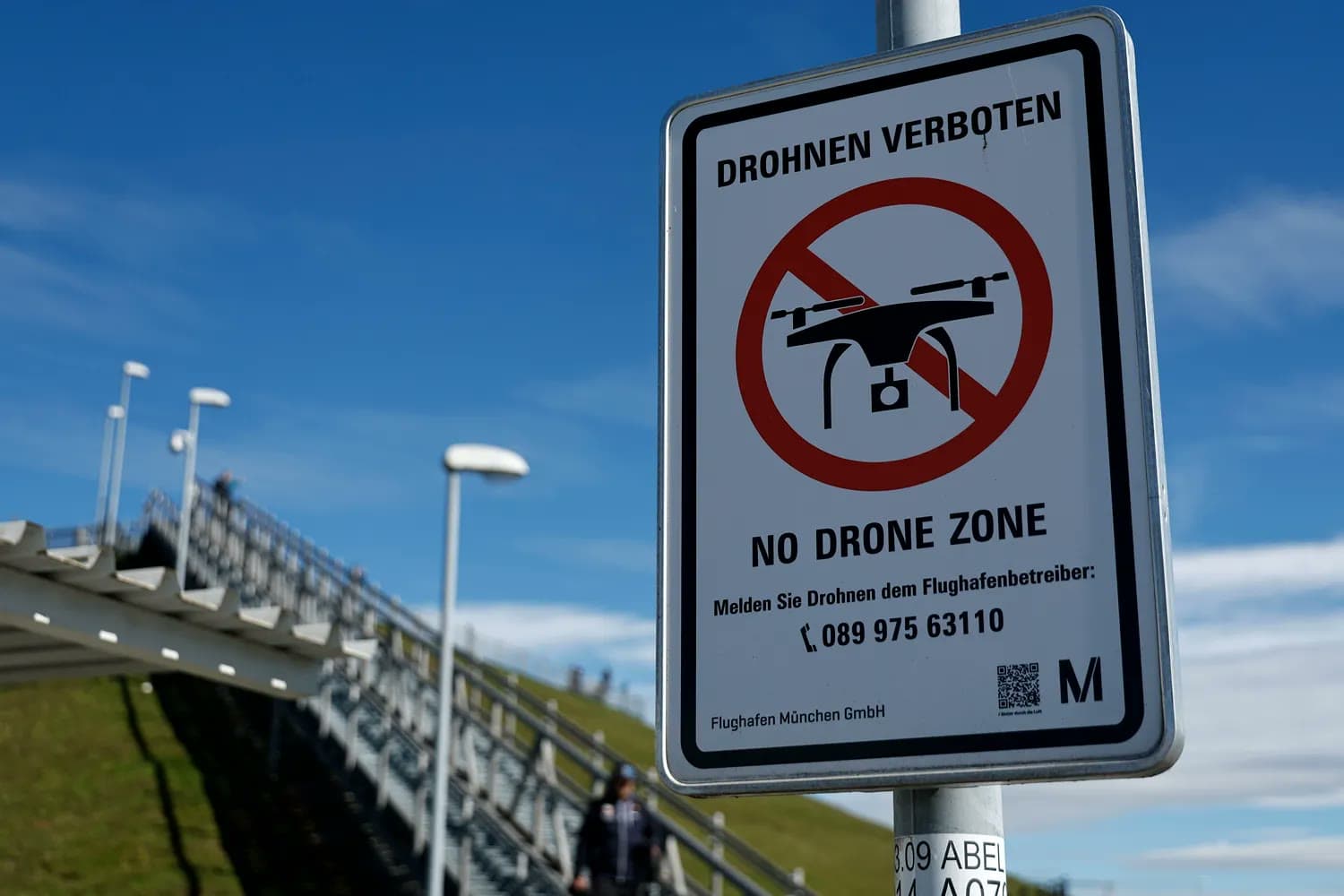
A sophisticated drone rigged with anti-detection technology and carrying 600 grams of semtex explosive turned up near Leipzig/Halle Airport in eastern Germany. Foreign agents were caught tracking the daily movements of a little-known drone-parts CEO. An online disinformation campaign flooded two state election races with fabricated content mimicking mainstream news outlets. According to Foreign Policy columnist Elisabeth Braw, Germany has spent the last several months absorbing a wave of what analysts call "gray-zone" or "hybrid" warfare, non-military tactics that fall short of conventional conflict but are designed to destabilize a target from within.
The likely culprit, Braw writes, is Russia, which has used similar tools for years against European states, including a mall fire in Warsaw, an attack on property tied to former U.K. Prime Minister Keir Starmer, and facilitating migrant flows at the borders of Norway and Finland. The Leipzig/Halle drone incident is particularly pointed: the airport is not just a regional hub but a crucial transit point for military supplies bound for Ukraine, and the drone was found hovering near aircraft belonging to Ukraine's Antonov Airlines before it accidentally dropped its explosive payload during a clumsy landing, Die Zeit reported. An alert airport worker spotted it in the middle of the night; authorities have not yet identified those responsible.
The disinformation push has targeted state elections in Saxony-Anhalt and Mecklenburg-Vorpommern this September, where the far-right, Russia-sympathetic Alternative for Germany is polling above 40 percent and around 36 percent respectively. Some of the campaign's personal targeting focused on Stefan Thumann, CEO of the mid-sized German firm Donaustahl, which supplies drones to Ukraine; German authorities, acting on a tip from a foreign ally, arrested a Ukrainian man and a Romanian woman this month who had reportedly been tracking Thumann's daily life, including visits to his home, and accused them of acting on behalf of a foreign intelligence agency.
Braw argues the campaign against Germany illustrates a broader rule she has drawn from more than a decade studying gray-zone tactics: attackers don't target countries because of their politics, but because of their vulnerability. Germany has spent decades as one of Europe's most earnestly cooperative states, co-founding the EU, participating in the Iran nuclear deal, and trying to resolve Russia's 2014 aggression against Ukraine through diplomacy, yet none of that restraint has spared it. "Gray-zone aggressors are actors of convenience," Braw writes. "They don't target countries, sectors, or groups because they're particularly high-profile or combative: They target them because they are low-hanging fruit."
Braw notes Russia isn't the only state playing this game; residents of small towns in Minnesota discovered earlier this summer that their water plants had been hit by cyber teams believed to be linked to Iran, in an operation that appeared to target relatively easy infrastructure rather than any specific political grievance against the state. Because Western countries rarely respond with anything resembling retaliation, Braw argues the cost-benefit math heavily favors the attackers, who can keep probing targets indefinitely, since a failed attempt carries essentially no consequence. Her conclusion is blunt: keeping a low profile doesn't make a country a smaller target, and vigilance, not diplomatic goodwill, is what actually catches these operations before they succeed.