
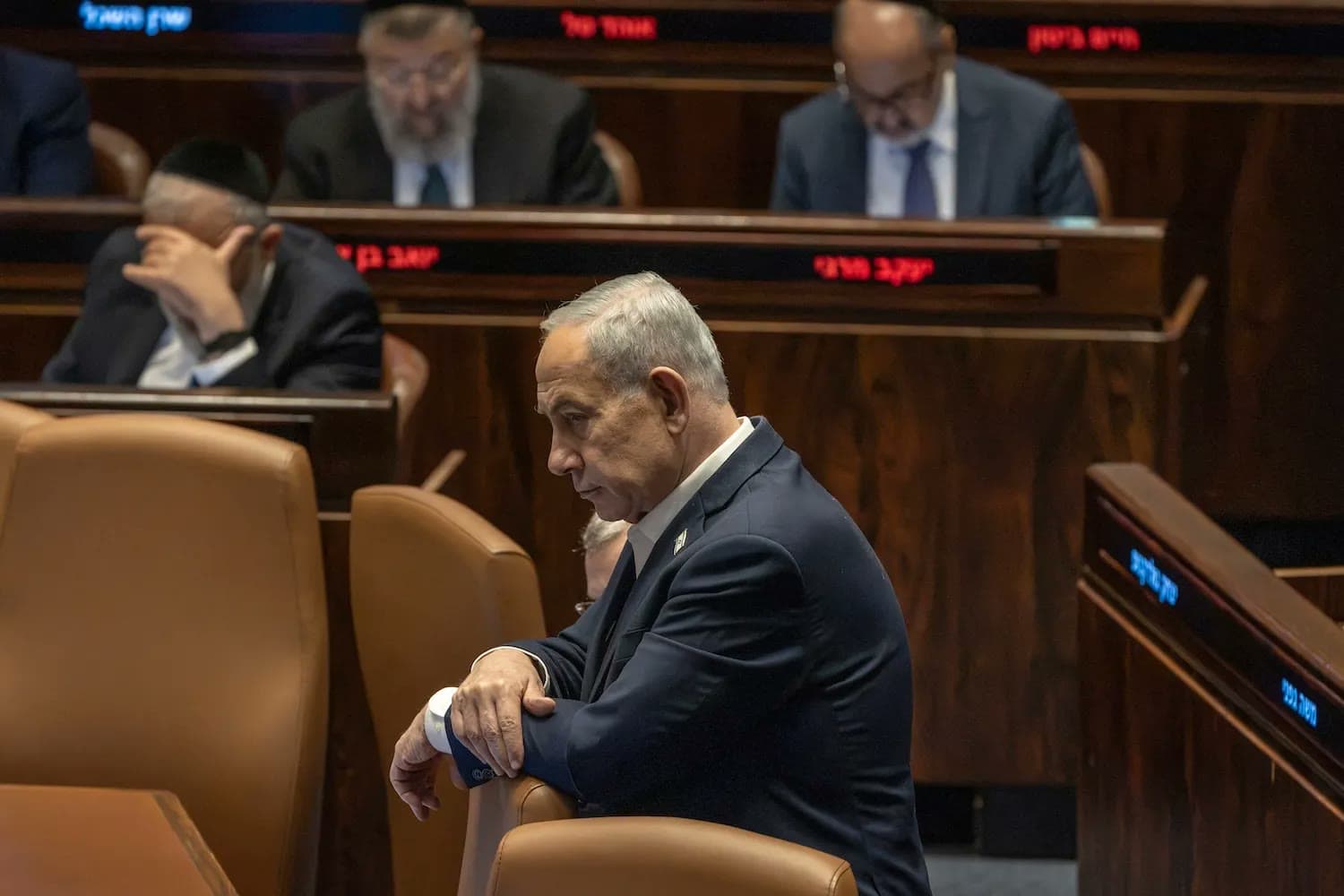
Israel formally rejected U.S. President Donald Trump's 15-point peace plan for Gaza, with Prime Minister Benjamin Netanyahu telling a cabinet meeting that Israeli forces would not withdraw until Hamas undergoes "genuine disarmament, not fictitious disarmament," covering "all weaponry," according to Foreign Policy's World Brief writer Alexandra Sharp. The plan still has Hamas's support, but Netanyahu does not want to be seen accepting anything short of "absolute victory" ahead of a critical Oct. 27 election, Shira Efron, the distinguished chair for Israel policy at the Rand Corp., told Foreign Policy's John Haltiwanger.
Ten months after the U.S.-brokered Israel-Hamas cease-fire signed in October 2025, permanent peace remains out of reach. Israel still controls more than half of Gaza and has killed more than 1,250 Palestinians during the nominal cease-fire, according to Gaza's Health Ministry. Parallel talks between Washington and Tehran to end the Iran war are similarly stalled: Iran's president said the country's supreme leader is calling for "unity and cohesion" as the war's economic costs mount, and an Iranian Foreign Ministry spokesperson said Tehran won't reopen the Strait of Hormuz until the U.S. ends its blockade, pays compensation for war damage, lifts sanctions, and releases Iran's frozen assets. Trump told Axios the U.S. is "only semi-negotiating" and taking a "low-key" approach, betting economic pressure alone will force Tehran's hand: "We are just watching Iran with its huge inflation and the fact they have no money."
The Gaza and Iran standoffs are unfolding alongside an escalating Saudi-Houthi conflict. A Houthi attack killed seven people and wounded 30 in the Red Sea city of Mocha, according to Yemen's military, targeting what a Houthi spokesperson described as Saudi troop concentrations and weapons depots, though Yemeni officials said residential neighborhoods were also hit. The Houthis also claimed an attack on an Aramco oil refinery in southwest Saudi Arabia, coming just two days after Riyadh signed a NATO-style collective defense pact with Turkey and Pakistan, leaving unclear what that new alliance might mean for the Houthi conflict going forward.
Sharp's reporting also flags a parallel escalation on Ukraine's front: a Ukrainian drone strike on the Taneco oil refinery in Nizhnekamsk, Russia, some 600 miles east of Moscow, killed at least 13 people and injured 75, marking one of the deadliest Ukrainian attacks inside Russia since the war began, part of what Zelensky described as a campaign to make "Russia's war" felt "more and more at their own home." Taken together, the picture across three theaters, Gaza, Iran, and Ukraine, is the same: deals rejected, stalemates holding, and each side betting that more pressure, not compromise, will eventually break the other's position.