
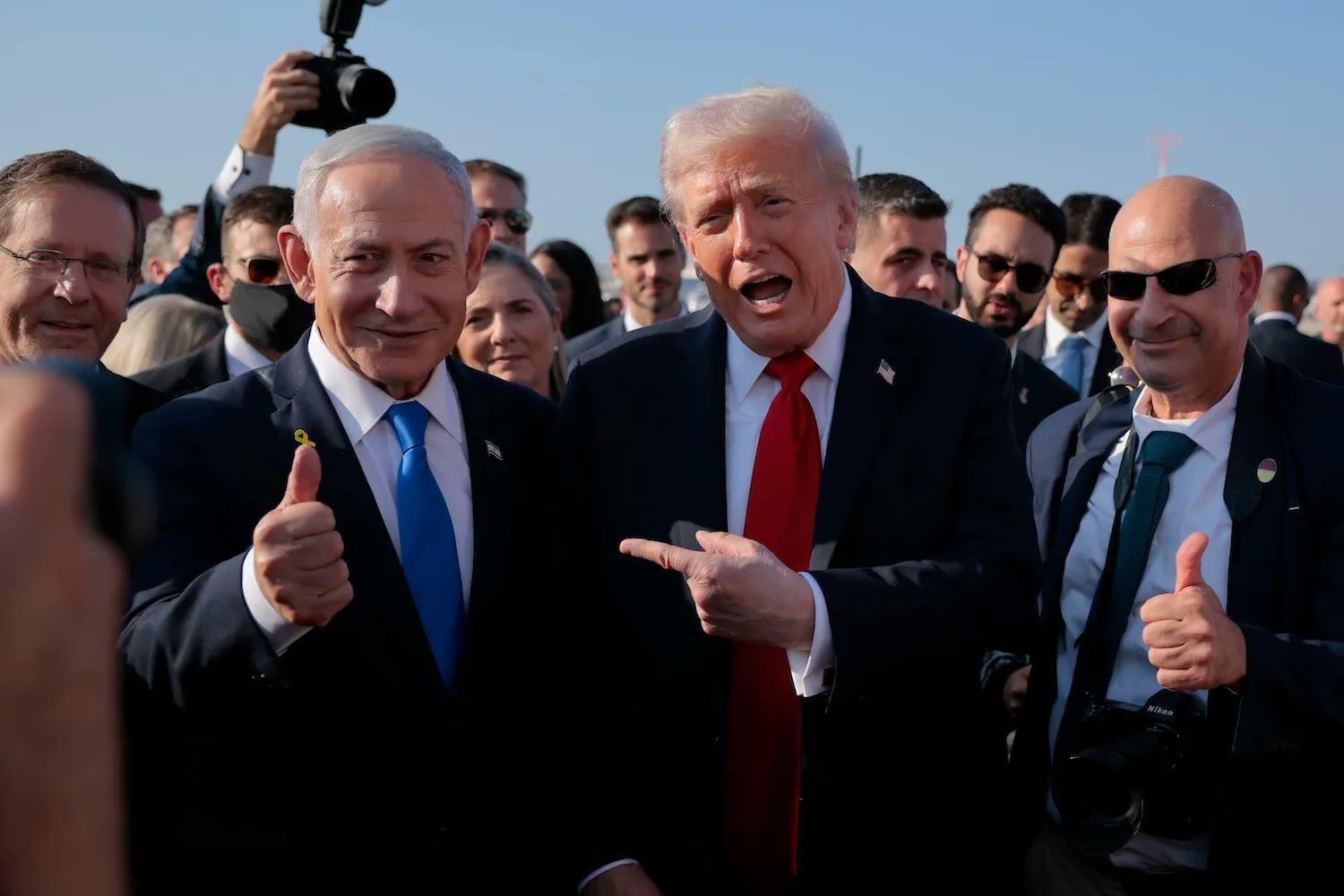
With Israel's election two months away, Prime Minister Benjamin Netanyahu is waiting on a single question that could shape the outcome: whether U.S. President Donald Trump will endorse him, according to Foreign Policy analysis by Aaron David Miller and Daniel C. Kurtzer. Recent polling suggests Netanyahu's coalition of right-wing, religious, and ultra-nationalist parties may fall short of a parliamentary majority, a defeat that would strip him of the political cover he has used to fend off his ongoing bribery, fraud, and breach of trust trial. Trump remains broadly popular in Israel, and while he can't singlehandedly deliver Netanyahu a win, an endorsement would likely help.
So far, Trump has passed up several chances to back him, saying only this week that "it's most appropriate for me to stay out of Israeli elections, but I may endorse somebody." Miller and Kurtzer argue Trump likes Netanyahu personally but is frustrated with his government, irritated by what many see as Netanyahu's role in pushing him into the Iran war and by how Netanyahu oversold the odds of a clean U.S.-Israeli victory there. Three factors are likely to shape whether Trump ultimately weighs in: polling showing Netanyahu could lose to Gadi Eisenkot, a figure Trump doesn't know and can't be sure would be easier to work with; the leverage created by Jared Kushner's concurrent Gaza demilitarization talks in Cairo and Israel, which Trump could use to pressure Netanyahu into accepting the plan as a precondition for his support; and the possibility that Trump has simply soured on Netanyahu enough to conclude no successor could be worse.
History suggests U.S. presidents can move the needle in Israeli elections, though rarely decisively. President George H.W. Bush withheld $10 billion in housing loan guarantees from Yitzhak Shamir in 1992 over settlement policy, contributing to Shamir's defeat that year, while President Bill Clinton's high-profile 1996 hosting of Shimon Peres didn't stop Peres from losing to Netanyahu. Trump himself set the standard for presidential intervention during his first term: Israeli billboards paired his image with Netanyahu's, he recognized Israeli sovereignty over the Golan Heights, hosted Netanyahu at the White House just 15 days before an election, and has more recently pushed Israel's president to pardon Netanyahu of the charges he's fighting in court.