
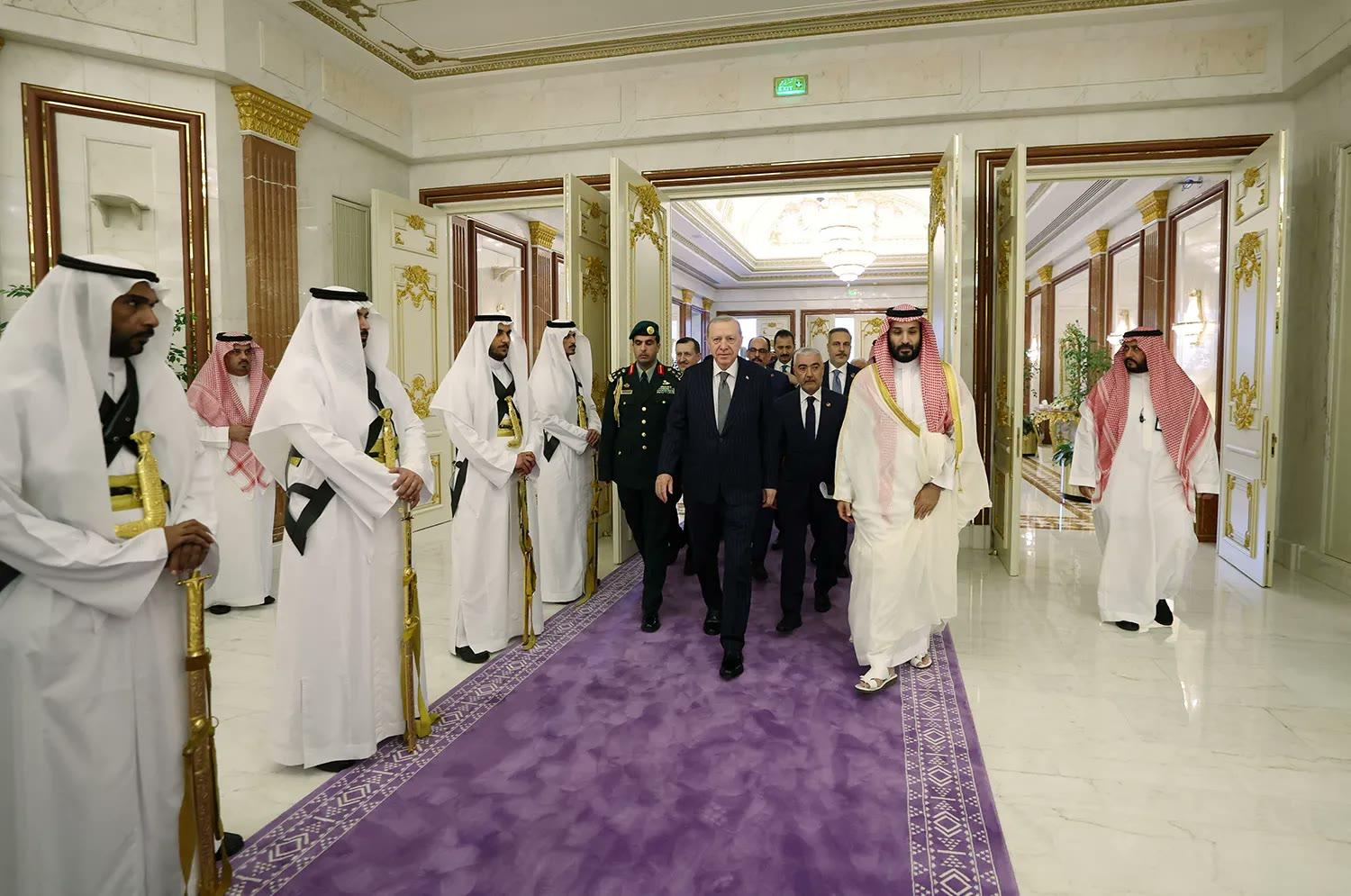
Pakistan, Saudi Arabia, and Turkey signed a joint defense pact on Friday, capping nearly a year of negotiations aimed at countering escalating military pressure across the Middle East, according to Foreign Policy's World Brief writer Alexandra Sharp. The Mecca Joint Defense Agreement functions as a NATO-style mutual defense pact among the three regional heavyweights: per a trilateral statement, it is "intended to strengthen collective deterrence against any act of aggression" and stipulates that "any armed attack against any one of the three states shall be regarded as an attack against them all." Egypt took part in early talks but was not named as a participant in Friday's signing, which brought together Pakistani Prime Minister Shehbaz Sharif, Saudi Crown Prince Mohammed bin Salman, and Turkish President Recep Tayyip Erdogan in Mecca, Islam's holiest city.
The three Sunni Muslim-majority nations already had deep military ties: Pakistan has trained and provided technical aid to Saudi forces for decades, Islamabad and Ankara have exchanged warships and training aircraft, and Riyadh has repeatedly bought Turkish drones. Last month, Pakistan and Turkey backed a Saudi-proposed maritime defense coalition meant to protect regional shipping routes from being held hostage during wartime. How far the new pact will actually go is less clear, Sharp notes: the countries don't have a strong track record of eagerly providing military support to one another. Pakistan signed a separate mutual defense deal with Saudi Arabia last September but has not responded militarily to Iran's recent attacks on the kingdom, and Islamabad has downplayed any suggestion that its nuclear capabilities might extend to its new allies.
Each country brings a distinct asset to the table. Pakistan is the only nuclear-armed Muslim nation in the world; Turkey has NATO's second-largest military and a large, profitable defense industry; and Saudi Arabia is among the world's top oil exporters and recently signed a pact with the United States to begin building a civilian nuclear program. Officials from both Ankara and Riyadh were quick to frame the pact as defensive rather than confrontational. "This does not represent an effort to establish a military axis or a sectarian bloc. Nor is it linked to any nuclear ambitions or arms race, rather it is focused on building sustainable capabilities," Saudi deputy minister for public diplomacy Rayed Krimly wrote on X, while Erdogan stressed the pact isn't aimed at any single country.