
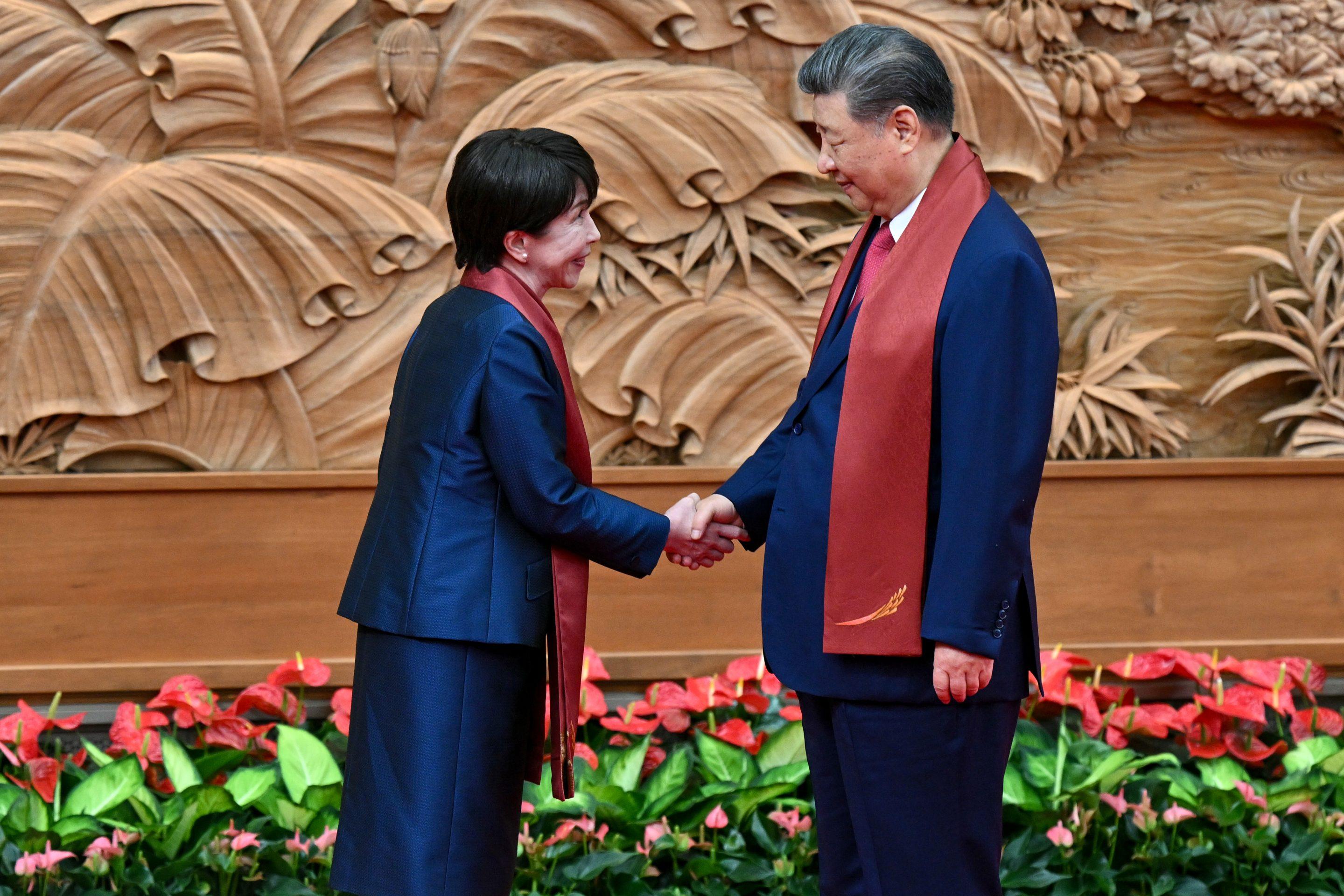
Japanese Prime Minister Sanae Takaichi shook hands with Chinese President Xi Jinping in Shenzhen last week, a fleeting gesture that marked the nearest thing to a diplomatic thaw between Asia's two largest economies since late last year.
The encounter took place on the sidelines of the Asia-Pacific Economic Cooperation leaders' meeting and lasted only moments. Takaichi greeted Xi and his wife, Peng Liyuan, as they received arriving guests. Beyond a few other brief exchanges, the two leaders held no official talks, and Japanese officials had reportedly asked Beijing to guarantee that Xi would treat Takaichi like other leaders as a condition of her attendance.
From trade to security
Observers say the relationship has shifted decisively from economics to security. Tensions spiked in November 2025 after Takaichi told Japan's parliament that a Chinese attack on Taiwan could prompt Tokyo to deploy its Self-Defense Forces if the conflict posed an existential threat to Japan.
Beijing demanded a retraction and warned that Japan would "bear all consequences." Foreign Ministry spokesperson Lin Jian said that if Japan intervened militarily in a Taiwan Strait conflict, China would "strike back decisively." China also advised its citizens against travelling to Japan and imposed export restrictions on dual-use goods, including rare earth elements, permanent magnets, and other critical minerals used in defence technology.
In Shenzhen, Takaichi restated that Japan's position on Taiwan had not changed since the 1972 Japan-China Joint Communiqué, which established diplomatic relations. But the atmosphere remained cool. According to Bloomberg and analysts including Stanford professor Daniel Sneider, Chinese officials treated South Korean President Lee Jae Myung far more warmly than Takaichi, a contrast that Japanese media and government officials noticed.