
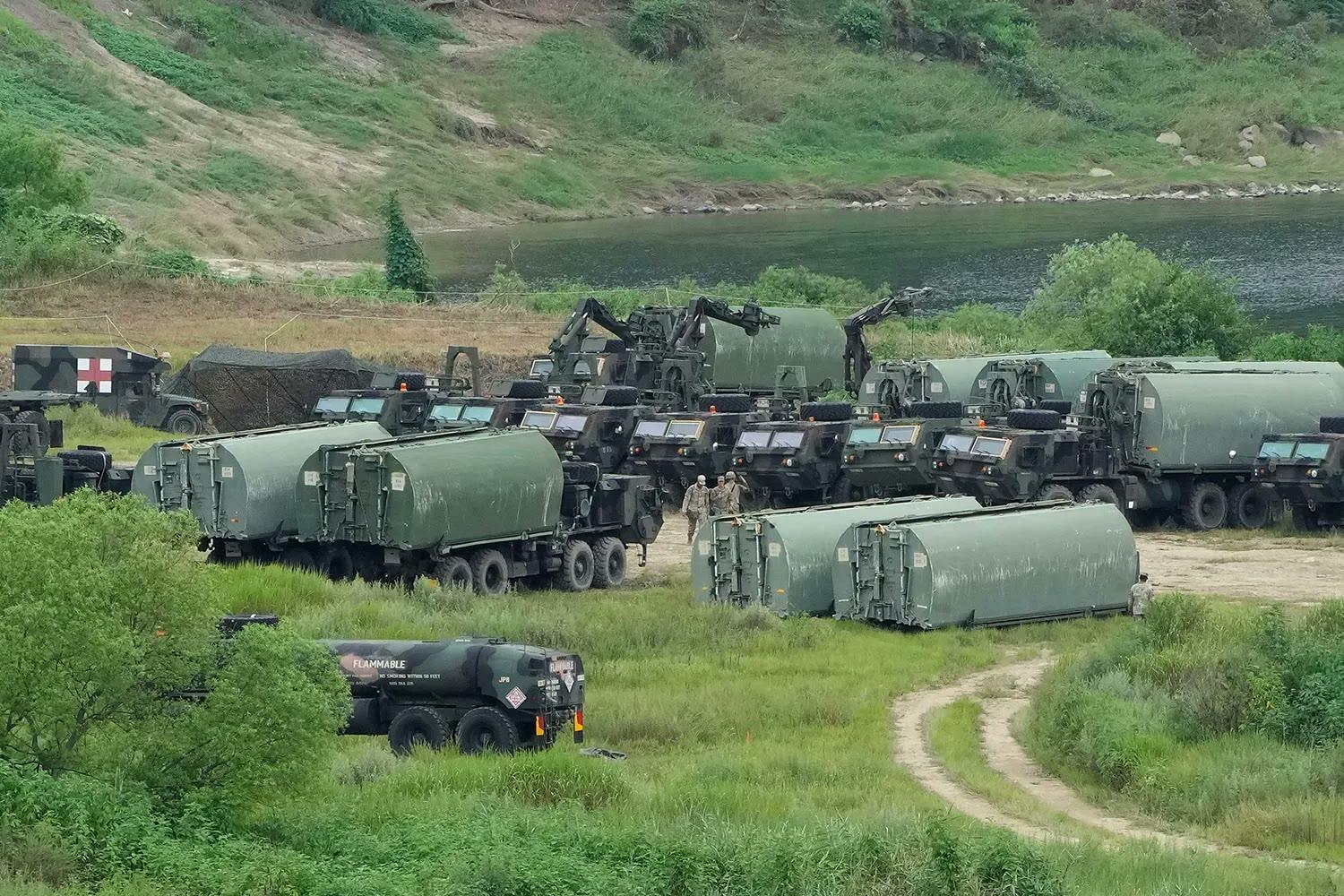
Joint U.S.-South Korean military exercises were only hours old when the White House abruptly reversed course, according to Foreign Policy's World Brief writer Alexandra Sharp. President Donald Trump ordered the Defense Department to scale back the 11-day Ulchi Freedom Shield drills early into the exercise, citing Seoul's alleged failure to adequately help Washington against Iran and his "very good relationship" with North Korean leader Kim Jong Un. "These exercises are not only costly, with much of these costs paid for by the United States of America (as usual!), but send a signal that is totally inappropriate and hostile, to a Country that, as long as Donald J. Trump has been President, has been unthreatening and respectful," Trump wrote on Truth Social. He also claimed South Korean President Lee Jae-myung said "No thanks!" when asked to join the U.S. effort toward what Trump called the "denuclearization" of Iran.
The move upends how Washington has traditionally framed the annual drills, Sharp notes: U.S. officials have long described Ulchi Freedom Shield as reinforcing the alliance as the "linchpin for regional peace and security" and reaffirming an "ironclad commitment" to defend South Korea. Instead, the scale-down reads as the White House punishing an ally for declining to join the Iran war, while extending goodwill to an authoritarian leader who has historically been a U.S. adversary. The timing lines up with a North Korean Foreign Ministry statement ahead of the drills accusing U.S. and South Korean forces of plotting further "provocative" exercises later this year, calling Ulchi a "rehearsal for an aggressive war," and vowing a "new level of a deterrent," likely including more ballistic missile tests in nearby waters.