
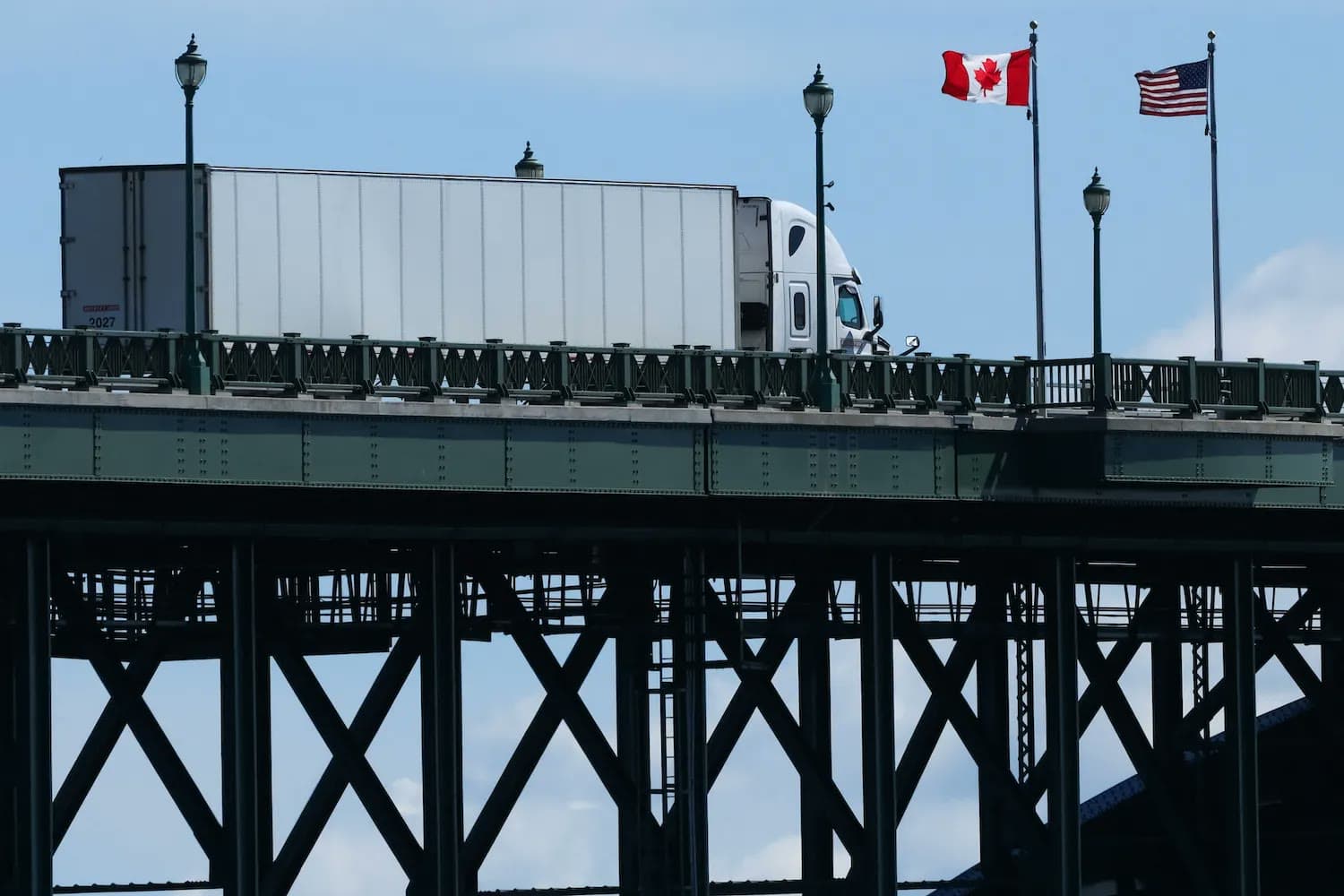
Canada and the United States have less than 30 hours to strike a trade deal before another round of sweeping U.S. tariffs kicks in, according to Foreign Policy's World Brief writer Alexandra Sharp. Washington had been set to impose 50 percent levies on roughly $20 billion worth of Canadian goods, from dairy products to electronics to hockey sticks, but President Donald Trump abruptly postponed the tariffs less than two hours before they were due to take effect, citing progress in the talks. A third of that 72-hour window has already passed with few details of an actual deal confirmed.
Per a White House proclamation, Canada has signaled it would remove certain tariffs on U.S. goods, including alcohol, dairy, and automobiles, that Trump has called discriminatory, and the president has floated reviving talks over the Keystone XL oil pipeline that the Biden administration scrapped in 2021. Ottawa has not confirmed those commitments. Washington appears ready to move too: the Wall Street Journal reported the U.S. is likely to cut tariffs on Canadian steel and aluminum from 50 percent to 25 percent, and on Canadian autos from 25 percent to 15 percent, with reductions on lumber duties and a possible credit system for Canadian auto parts also under discussion.
Canadian Prime Minister Mark Carney framed the emerging deal as a win, writing on X that "Canada entered these discussions with the best overall trade terms. We are now moving towards an agreement that reinforces that Canadian advantage, including by securing the best terms in each of Canada's most important strategic sectors and providing greater certainty about our future trading relationship." A White House official cautioned that any deal is still "being finalized" and that reported details "should be regarded as speculation" until an official announcement, though Trump himself told reporters the same day that "we may bring some of the tariffs down to the level where other countries are" because "Canada was paying a higher tariff."
Thursday's negotiations brought together U.S. Trade Representative Jamieson Greer, Canadian trade minister Dominic LeBlanc, and chief Canadian negotiator Janice Charette, while U.S. Secretary of State Marco Rubio separately met Canadian Foreign Minister Anita Anand at the White House. With the clock running out on the tariff pause, the shape of any final agreement, and whether Ottawa or Washington ends up conceding more ground, is expected to become clear within the window Trump set for himself.