
European credit rating agency Scope Ratings held the United States' sovereign rating at AA- on Friday, three notches below the top grade and two steps below the AA+ scores assigned by Moody's, Fitch, and S&P Global Ratings. The agency cited the dollar's reserve-currency status, the Federal Reserve's institutional strength, and the depth of U.S. capital markets as continuing points in the country's favor. But it warned that rising debt-servicing costs are increasingly putting American fiscal policy at the mercy of bond-market sentiment rather than Washington's own choices, according to Fortune's Jason Ma.
Scope kept its outlook stable but flagged worsening deficits driven by what it called persistent "structural expenditure pressures" and a lack of political appetite for fiscal reform. With the 10-year Treasury yield now at 5.27%, already well above the Congressional Budget Office's long-term forecasts of 4.3% to 4.4% through the mid-2030s, the Committee for a Responsible Federal Budget estimates that yields running a full percentage point above CBO's projections alone would add roughly $3.5 trillion to the national debt over the next decade.
A shrinking maturity cushion
Part of the exposure is structural. The Treasury has been shifting the debt portfolio toward shorter-term notes and away from longer-dated bonds, a rebalancing strategy that began under the Biden administration and that Treasury Secretary Scott Bessent has continued, including through buybacks that retire longer-term debt in favor of short-term issuance. That approach leaves more of the debt needing to be rolled over on tighter timelines, which becomes considerably more expensive whenever yields spike, as they have in recent months.
Scope also pointed to a shift in who is buying that debt. Price-sensitive hedge funds have taken a larger role in the $32 trillion Treasury market, displacing foreign central banks that historically held U.S. debt more steadily and with less regard for short-term price swings — a change the agency says has added to market volatility.
A debt ceiling deadline arrives after the midterms
Absent stronger growth or a meaningful fiscal correction, Scope projects general government debt will climb toward 160% of GDP by 2036. "This trajectory points to an unsustainable medium-term fiscal path and leaves the sovereign increasingly exposed to shifts in market sentiment and financing conditions," the agency said.
Compounding the pressure, Scope expects the current $41.1 trillion debt ceiling to be reached by early 2027, with Treasury able to rely on so-called extraordinary measures for only a few months before Congress must act. The timing lands squarely in the aftermath of the midterm elections. "While Scope's baseline assumes that policymakers will ultimately agree to raise or suspend the debt limit, the post-midterm political landscape could increase the scope for prolonged partisan standoffs," the agency said, adding that repeated debt-ceiling fights have already exposed weaknesses in U.S. fiscal governance.
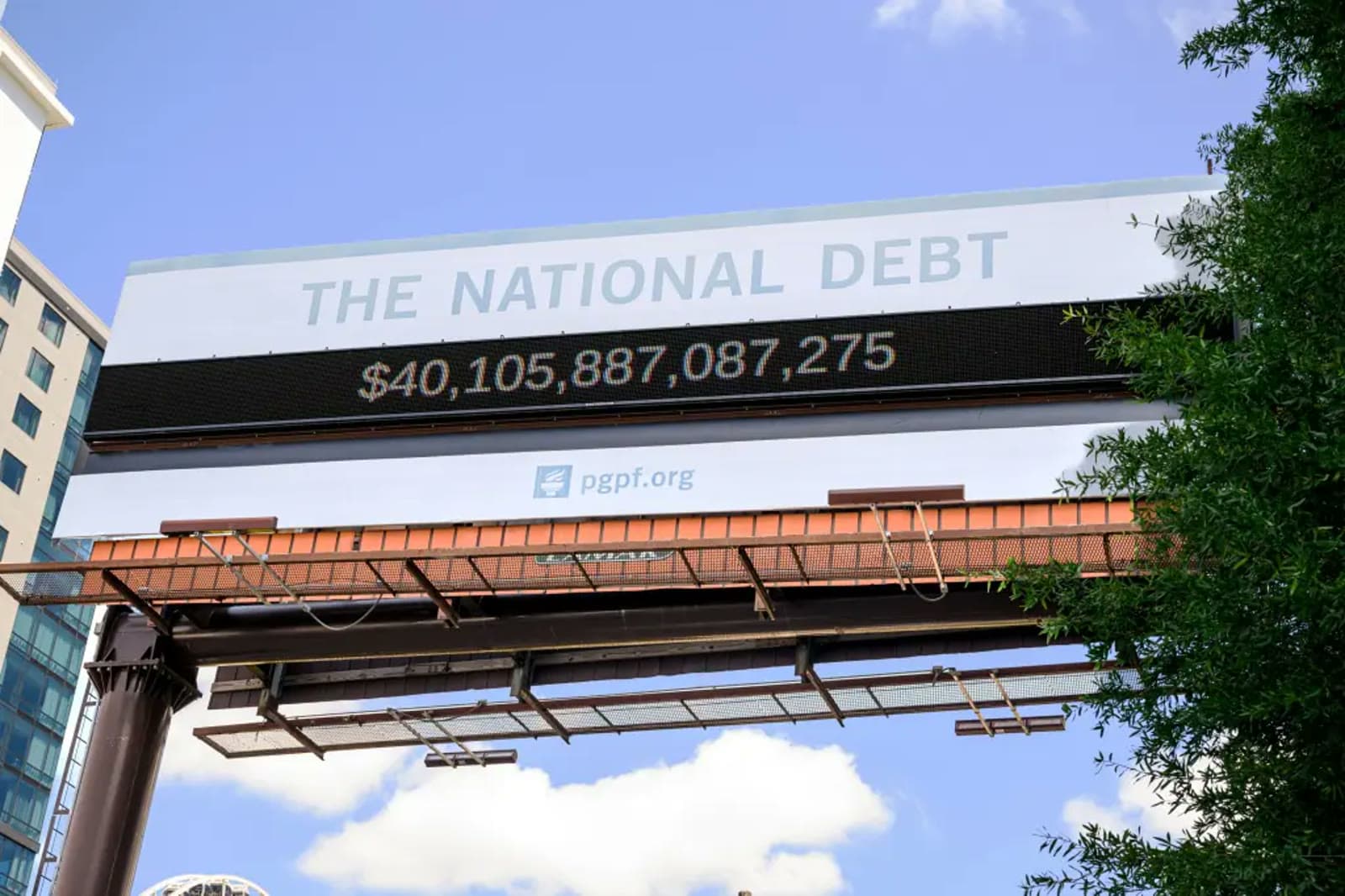
The report landed as the federal government closed out fiscal 2026, which the Committee for a Responsible Federal Budget tallied at a $2 trillion deficit — 6.2% of GDP — with publicly held debt reaching $32.3 trillion, or 100% of GDP, and interest costs hitting a record $1.1 trillion, or 3.4% of GDP, now the second-largest line item in the federal budget after Social Security and ahead of both defense and Medicare. "Based on evidence from the past year, we now expect much higher interest payments and lower tariff revenue going forward, which could send deficits and debt surging well beyond [CBO's] projections," the group said.