
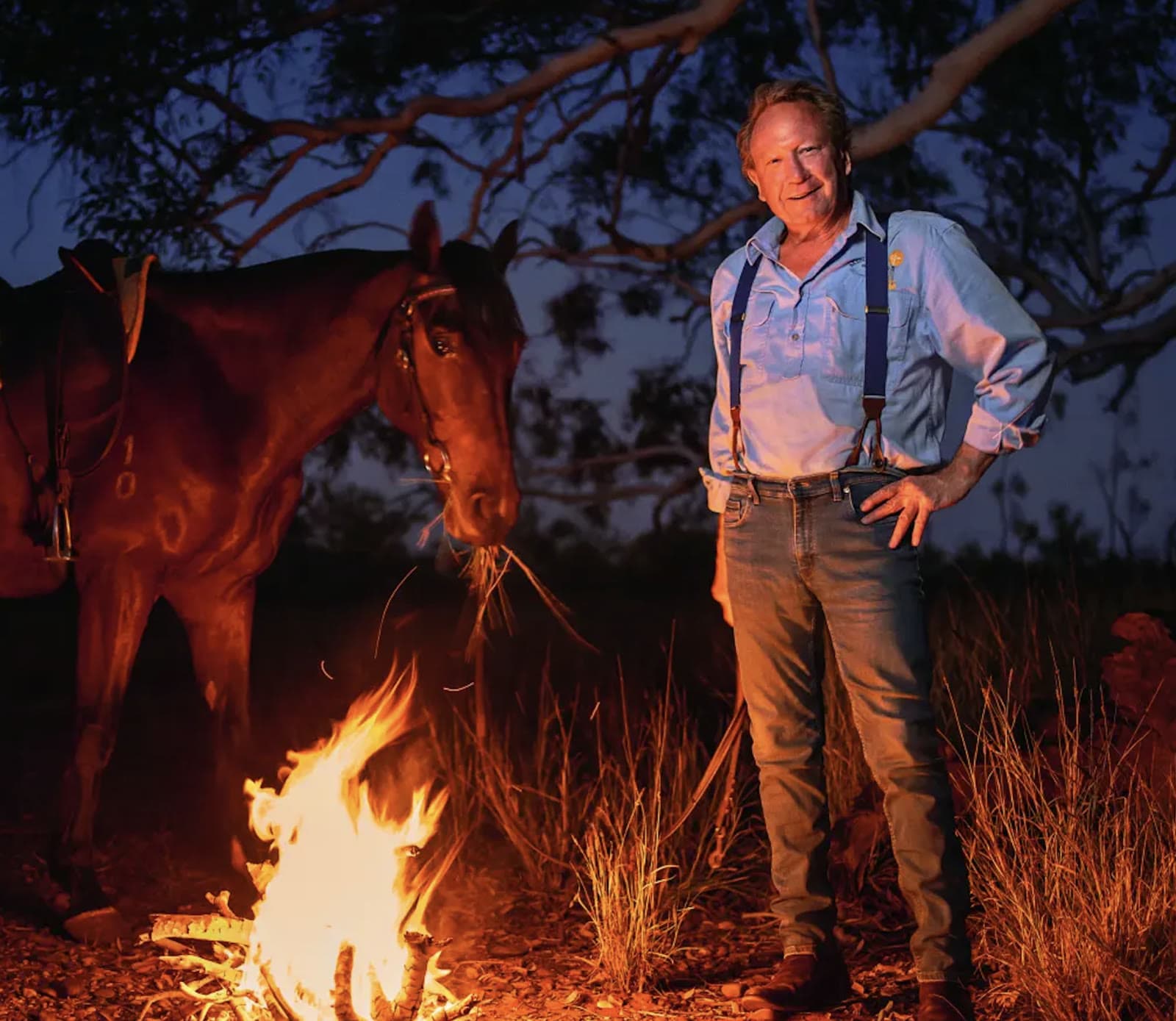
Andrew Forrest built Fortescue by breaking a mining duopoly; now the Australian billionaire is betting the company's future on eliminating fossil fuels from its iron ore operations entirely, while simultaneously bankrolling a parallel effort thousands of miles away to rebuild Ukraine's power grid, according to a Fortune profile of the executive chairman by Vivienne Walt.
Forrest, 64, has set Fortescue on a self-imposed 2030 deadline to strip diesel and gas from mines that produce roughly 222 million tons of iron ore a year in Western Australia's remote Pilbara region. The plan, which he calls "Real Zero," rejects carbon offsets and other accounting mechanisms that many large emitters rely on to claim progress. "Everything else is going to be easier than mining," Forrest said, arguing that if Fortescue can decarbonize an industry as energy-intensive as iron ore, few other sectors will have an excuse not to follow.
A costly bet against industry consensus
The strategy puts Fortescue at odds with far older and larger rivals BHP and Rio Tinto, both of which have scaled back their own climate targets in recent years. Fortescue says the transition will cost roughly $6.2 billion through 2030, funding new solar and wind capacity, battery storage, and a fleet of up to 400 battery-powered haul trucks intended to replace diesel vehicles by 2028. The company projects the overhaul will eventually save about $1 billion a year in diesel costs.
Not every investor is convinced the bet will pay off. Goldman Sachs downgraded Fortescue's stock in July, with an analyst warning that the company's decarbonization spending had yet to show returns. Fortescue also shelved a planned $550 million green hydrogen plant in Arizona last year after the U.S. ended federal subsidies that had underpinned the project. Separately, a Fortescue-commissioned review found the company's own emissions rose sharply between 2020 and 2025, which it attributes to the ramp-up of a newer mine rather than a reversal of its climate goals.
An unlikely second front in Ukraine
Forrest's involvement in Ukraine dates to Russia's 2022 invasion, when he canceled Fortescue's plans to develop green hydrogen projects in Russia and was subsequently barred from the country. Since then, his philanthropic arm, the Minderoo Foundation, has directed tens of millions of dollars toward Ukrainian schools, agricultural projects, and demining efforts.
More recently, Forrest has applied lessons from running mines in one of the world's most isolated regions to a very different problem: keeping the lights on in a country whose Soviet-era power plants have proven vulnerable to Russian missile strikes. Working with Ukrainian officials, he is helping develop a network of smaller, distributed renewable power stations designed to be harder to target than large centralized plants, with the first installation expected to come online this winter. Forrest has compared the potential payoff to West Germany's postwar economic recovery, predicting a faster rebound for Ukraine once the fighting ends.
Whether either bet succeeds remains open. Fortescue's mining transformation is running on a fixed and fast-approaching timeline, while the Ukraine grid project's returns depend on an eventual peace that has yet to materialize. Forrest, for his part, has continued to frame both as long-term investments rather than acts of charity, telling Fortune that a strategy which cannot outcompete fossil fuels on cost is not a viable one.