
As the U.S.-Iran war grinds on with air power alone failing to break Tehran's resolve, concern is growing in Washington that a ground operation could be next, according to Foreign Policy staff writer John Haltiwanger. President Donald Trump has refused to rule out deploying ground forces as the conflict, now largely a fight for control of the Strait of Hormuz, continues to disrupt global energy markets, and the U.S. has reportedly sent additional special operations forces and medics to the region to widen his set of options.
At a Tuesday hearing, Joint Chiefs of Staff Chairman Gen. Dan Caine declined to say whether he expects ground combat to be the next step, but conceded that "air power's got limits" and that the military "always develop[s] an unbelievable amount of options." Former officials and experts told Foreign Policy the U.S. does not appear to be preparing a major ground invasion, which would require far more than the roughly 50,000 troops currently deployed in the region. "I don't think we're looking to put troops in downtown Tehran," said retired Army Gen. Joseph Votel, who led U.S. Central Command from 2016 to 2019, adding that the White House does not appear to be considering ground strikes on nuclear sites.
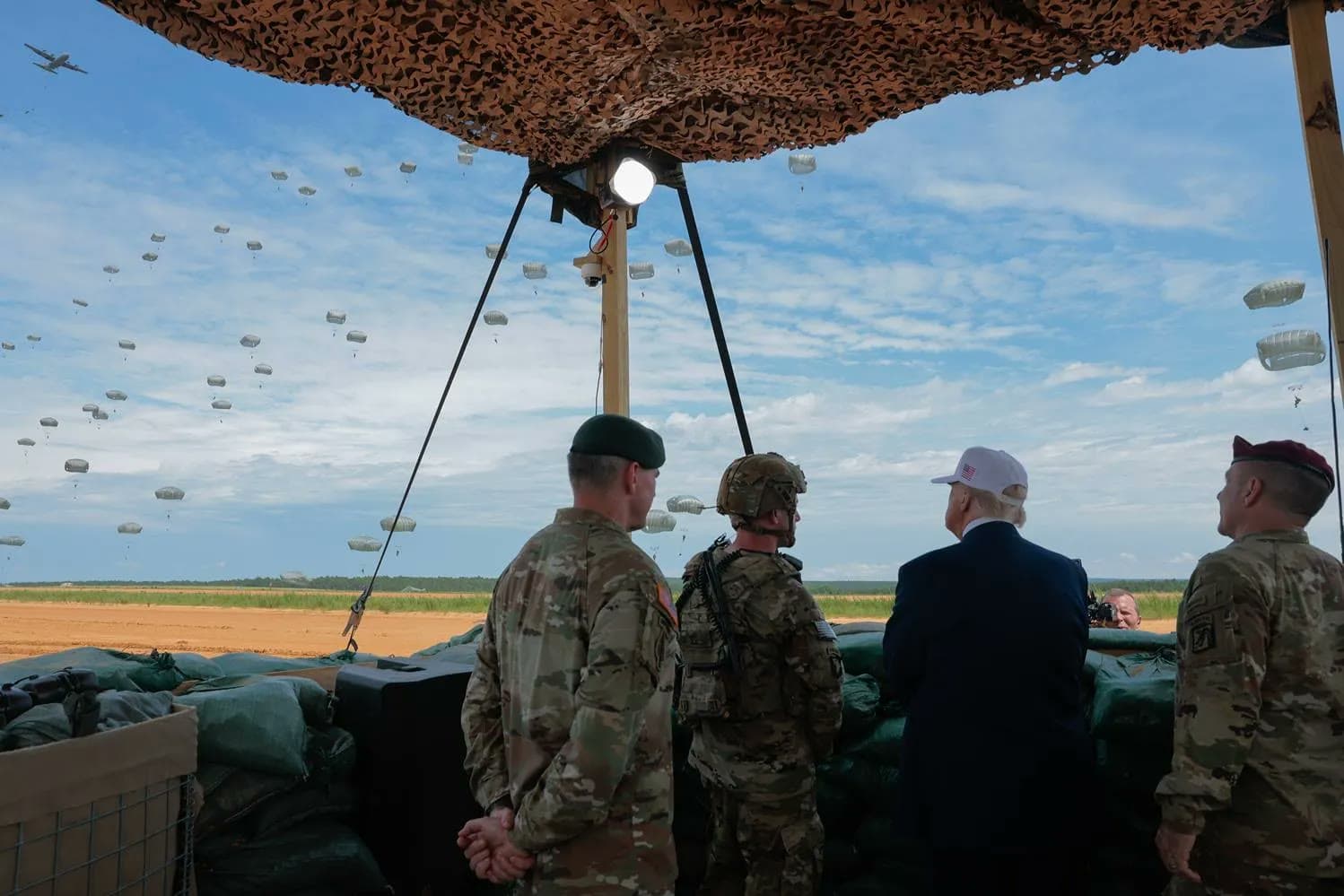
What does look plausible, according to Votel and retired Marine Col. Mark Cancian of the Center for Strategic and International Studies, is a more limited operation: special-operations raids on coastal military infrastructure, or seizing a strategic island like Kharg, roughly 400 miles from the Strait of Hormuz but a vital hub for Iran's oil exports. Cancian said the U.S. has the Marines and paratroopers in place to take Kharg, though it would be a "major combat operation" with "no question" of American casualties, even if Iran likely "could [not] muster the firepower to drive us off." A larger operation to seize mainland territory near the strait, by contrast, would take at least 100,000 troops, Votel estimated, against an Iranian army fielding forces in the "vicinity of 1 million," per Cancian, who put the odds of a mainland ground operation at "nearly zero."
Lawmakers in both parties are wary. "I don't see how it's possible to just take an island and not expose U.S. troops to being shot at every single day by Iran," said Democratic Rep. Ted Lieu, an Air Force veteran on the House Foreign Affairs Committee. "The problem is not: Can the U.S. military take territory? Of course we can. The problem is what happens the day after... it's just going to be another forever war." Republican Rep. Pat Harrigan, a former Green Beret on the House Armed Services Committee, echoed the concern in a Facebook post, calling Iran "the hornet's nest of hornet's nests." Lieu added that he doesn't discount Trump actually pursuing it: "I certainly think that, in his head, he thinks a ground invasion is a plausible option," pointing to Trump's earlier decision to send ground forces into Venezuela.
The political stakes are real too: gas prices have risen with the war, it remains unpopular with voters, and Republicans are watching its effect on their slim House majority ahead of November's midterms. A Washington Post report suggested the Pentagon has not fully briefed the White House on munitions shortages that could constrain Trump's options, though White House spokesperson Anna Kelly rejected any suggestion of a gap between the president and the Pentagon, telling Foreign Policy the military has "more than enough munitions, ammo, and stockpiles" and that "Operation Epic Fury has exposed what happens when you mess with the United States." Votel, for his part, said the military "has done exactly what has been asked of them," but that it has been difficult "to appreciate what the long-term strategic objectives" of the war actually are.