
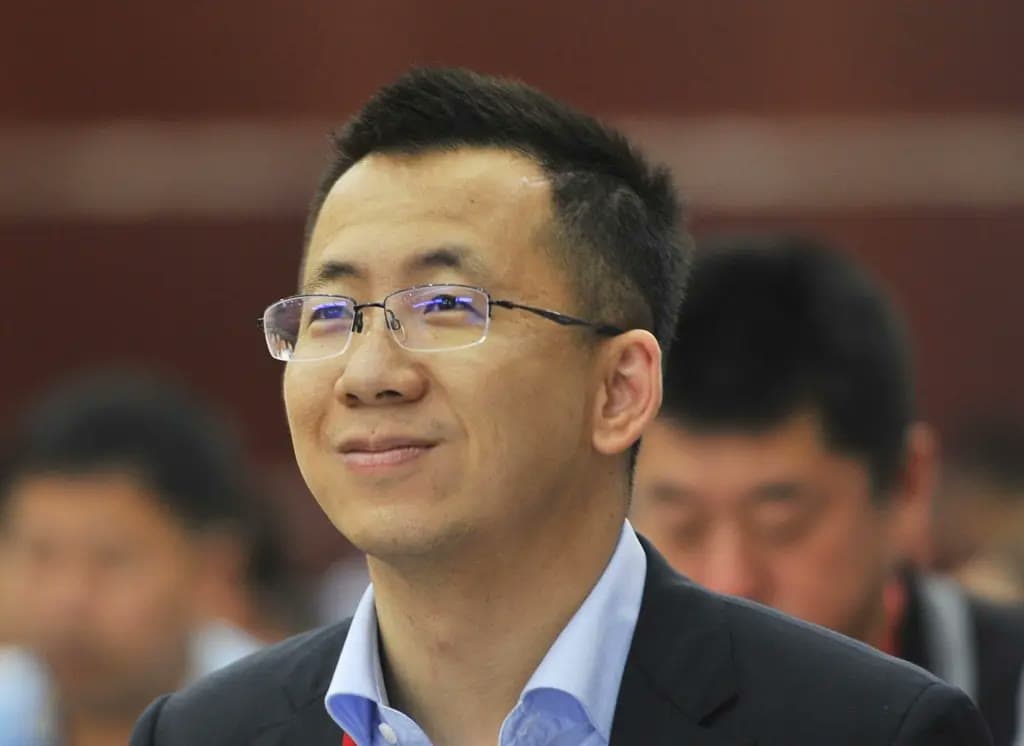
TikTok parent company ByteDance's founder Zhang Yiming has overtaken Indian tycoon Gautam Adani as the richest person in Asia, with a net worth Bloomberg puts at roughly $105.5 billion, according to Fortune's Emma Burleigh. The milestone is notable given how close Zhang came to losing his most visible asset altogether: regulatory pressure in the United States nearly forced a shutdown or forced sale of TikTok, yet his fortune has kept climbing through the standoff rather than shrinking because of it. Zhang, who owns roughly 21 percent of ByteDance, added $12 billion to his net worth this month alone after fresh valuations from BlackRock and Fidelity.
The scale of the gain is what stands out most. Zhang's wealth is now nearly eight times what it was in 2019, the year Bloomberg first began tracking his fortune at $13 billion, and AI has been the single biggest driver of that growth. ByteDance built out its AI technology during the same period it was fighting to keep TikTok operating in the U.S., and Bloomberg's reporting notes the company can draw on data from its social apps, TikTok's billion-plus daily active users alongside hundreds of millions more on its Chinese sibling app Douyin, to train its models, giving it a scale advantage most AI competitors don't have. Lian Jye Su, chief analyst at research firm Omdia, credited Zhang's timing directly: "He plays his cards right. He stayed on course and then continued to double down on AI investment."
Zhang's rise is one entry in a much broader pattern of AI reshaping the global billionaire rankings. Dell Technologies founder Michael Dell has seen his own fortune nearly double in the past year, climbing to roughly $262 billion and making him the fifth-richest person in the world, after Dell's AI-optimized server revenue jumped 757 percent to $16.1 billion in a recent quarter, enough to push him past Mark Zuckerberg on the rankings. Google co-founder Larry Page overtook Jeff Bezos after Alphabet's Gemini 3 model launched in December 2025, and his net worth has since climbed to about $293 billion, making him the world's second-richest person.
The pattern isn't limited to founders of already-massive companies. Burleigh's reporting notes that the number of self-made billionaires under 30 hit an all-time high last year, according to Forbes, and most of them got there by building AI companies while the sector was hot: 25-year-old Sualeh Asif co-created Cursor, the AI coding tool now valued at $29.3 billion, while Gen Z founders Adarsh Hiremath and Surya Midha crossed ten figures building Mercor, an AI recruiting startup that connects talent with major Silicon Valley AI labs. Of eleven young entrepreneurs Forbes identified as new billionaires, eight got there through AI ventures specifically.
What ties Zhang's story to the rest of that list is timing more than any single product decision: the entrepreneurs who committed hardest to AI investment before it became conventional wisdom are the ones now dominating the wealth rankings, whether that meant a Chinese founder fighting a geopolitical battle over his flagship app, a legacy hardware company pivoting its server business, or a handful of twentysomethings building tools for an industry that barely existed five years ago.