
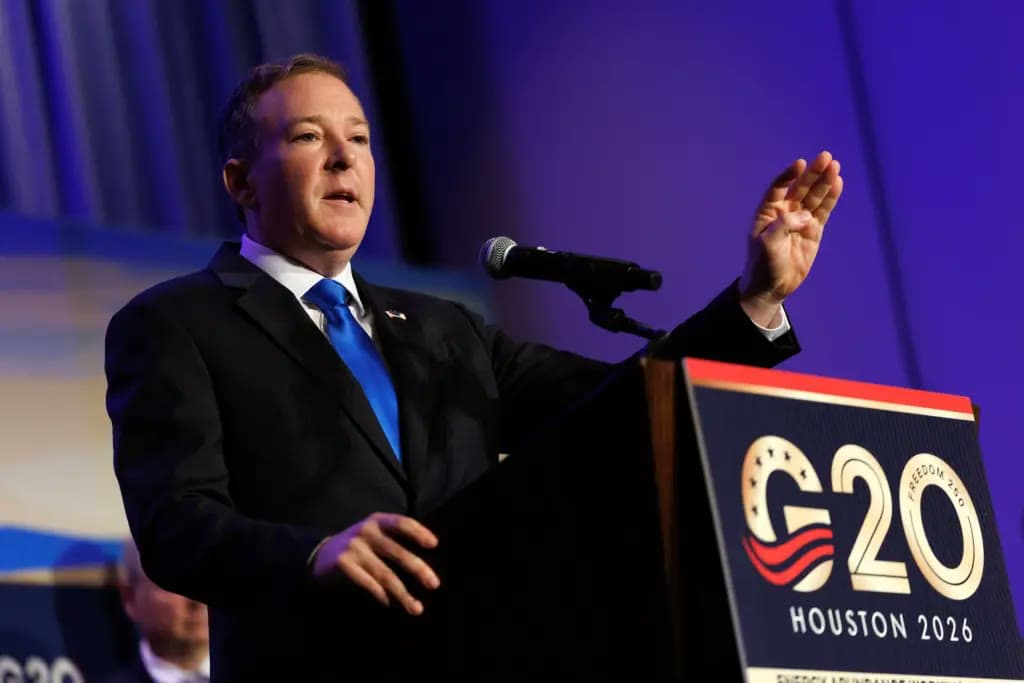
The Environmental Protection Agency finalized what it's calling the largest deregulatory action ever taken in the power sector, repealing Biden-era emission limits on power plants just days after federal weather data confirmed the summer of 2026 was the hottest on record in the United States, roughly 3 degrees Fahrenheit above average, according to Fortune's Jordan Blum. EPA Administrator Lee Zeldin announced the rollback Monday at the G20 energy ministerial in Houston, framing it as a matter of cutting red tape rather than climate policy: "We are cutting the red tape to deliver the largest power sector deregulatory action ever." He added that the agency intends to go further still, moving to rescind every remaining greenhouse gas standard for power plants.
The 2024 Biden-era rule the EPA is undoing had required power plants to either cut emissions or capture 90 percent of their climate pollution. Trump's EPA isn't just repealing that requirement, it's arguing the agency never had legal authority to regulate climate pollution from power plants in the first place, a position that, if it survives the legal challenges Blum's reporting says are inevitable, could block future administrations from reinstating similar rules at all. The agency's own language leaves little ambiguity about where it stands: it said "emissions from power plants have no material impact on global climate change," a claim environmental groups have called an outright lie.
Sierra Club chief program officer Holly Bender put the criticism in blunt terms, accusing the administration of handing the fossil fuel industry "a license to keep polluting" even as wildfires, floods, and soaring utility bills already show the cost of a warming climate. Fossil fuel power plants account for nearly a quarter of the country's total climate pollution, second only to transportation, and this rollback follows the EPA's earlier reversal of its 2009 endangerment finding, the scientific basis that first established greenhouse gases as a threat to public health, along with a separate repeal of vehicle emissions rules.
The administration's own justification leans less on the legal argument and more on keeping the lights on for an AI industry racing to build power-hungry data centers faster than new generation capacity can come online. Dan Romito, managing director for sustainability at Opportune, told Fortune the move amounts to a deliberate stopgap: "It's a Band-Aid for a lot of these data centers to figure out how to get replacement or complementary power. We need a little bit of a stopgap here. It's not an ideal choice. But coal can fill that bill for three, four, maybe five years," buying time for nuclear and geothermal projects to reach the grid. With congressional permitting reform stalled and new power projects struggling to get built, Romito argued something had to give: existing coal and gas plants need to stay online longer, not necessarily to meet future demand projections, but simply to cover what the grid needs right now.
Zeldin was careful to frame the rollback as removing an obstacle rather than mandating an outcome. "Will more data centers be using coal? That's not something the EPA is going to dictate," he said. "What we are going to make sure is that we're following the law, that we are empowering that choice, and that we're making sure the smartest decisions are made to unleash energy dominance in this country in every form." Asked about the legal fight ahead, Zeldin's response was equally direct: "If you have a problem with the law, change the law."