
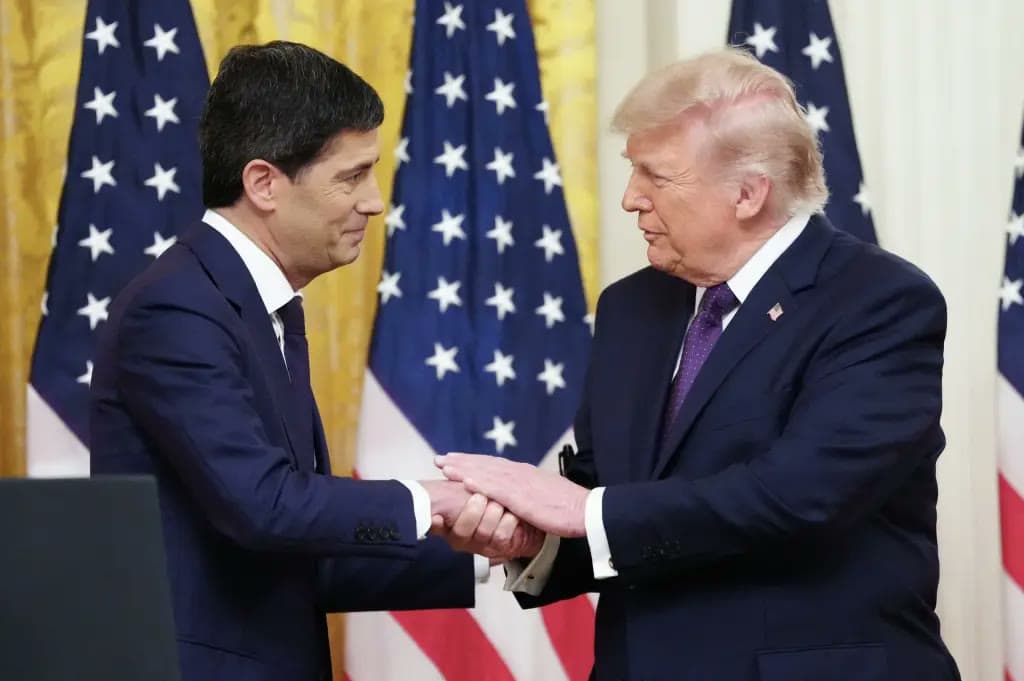
Ten days before the Federal Reserve's next rate decision, the Trump administration is mounting an unusually broad public campaign to stop Fed Chair Kevin Warsh from delivering the rate hike Wall Street has increasingly come to expect, according to Fortune's reporting. The pressure comes from multiple corners of the White House at once, with the president, vice president, and Treasury secretary all publicly urging the Fed not to raise rates, and in some cases pushing for cuts instead, an alignment across the administration's economic leadership that is rare even by the standards of past presidential pressure campaigns on the central bank.
The irony is that Trump nominated Warsh in the first place on the expectation he would be receptive to lower rates. Instead, Warsh has avoided committing to either cuts or hikes, preferring to let incoming data speak for itself. At his Jackson Hole debut as Fed chair, Warsh gave markets what they read as a clear signal anyway: "It's hard to say that Fed policy is restrictive when you look at the economy right now," he said, a line CNBC and other outlets interpreted as a direct hint toward tightening. Market-implied odds of a September hike jumped from about 40 percent the week before that speech to roughly 55 percent afterward, with the Federal Open Market Committee's decision due Sept. 16.
The data Warsh is weighing cuts against the administration's preference in both directions. The Bureau of Labor Statistics reported the U.S. economy added 162,000 jobs in August with unemployment steady at 4.1 percent, a solid enough labor market that it removes one traditional argument for holding rates down. Inflation is the bigger complication: the BLS's most recent all-items reading put 12-month inflation at 3.4 percent, and the Fed's preferred July PCE gauge showed headline inflation at 3.7 percent and core inflation at 3.3 percent, both well above the Fed's 2 percent target. The FOMC's July meeting already showed cracks in the committee's patience: three members, Cleveland Fed President Beth Hammack, Minneapolis Fed President Neel Kashkari, and Dallas Fed President Lorie Logan, voted for an increase then, with the decision to hold passing only 9-3.