
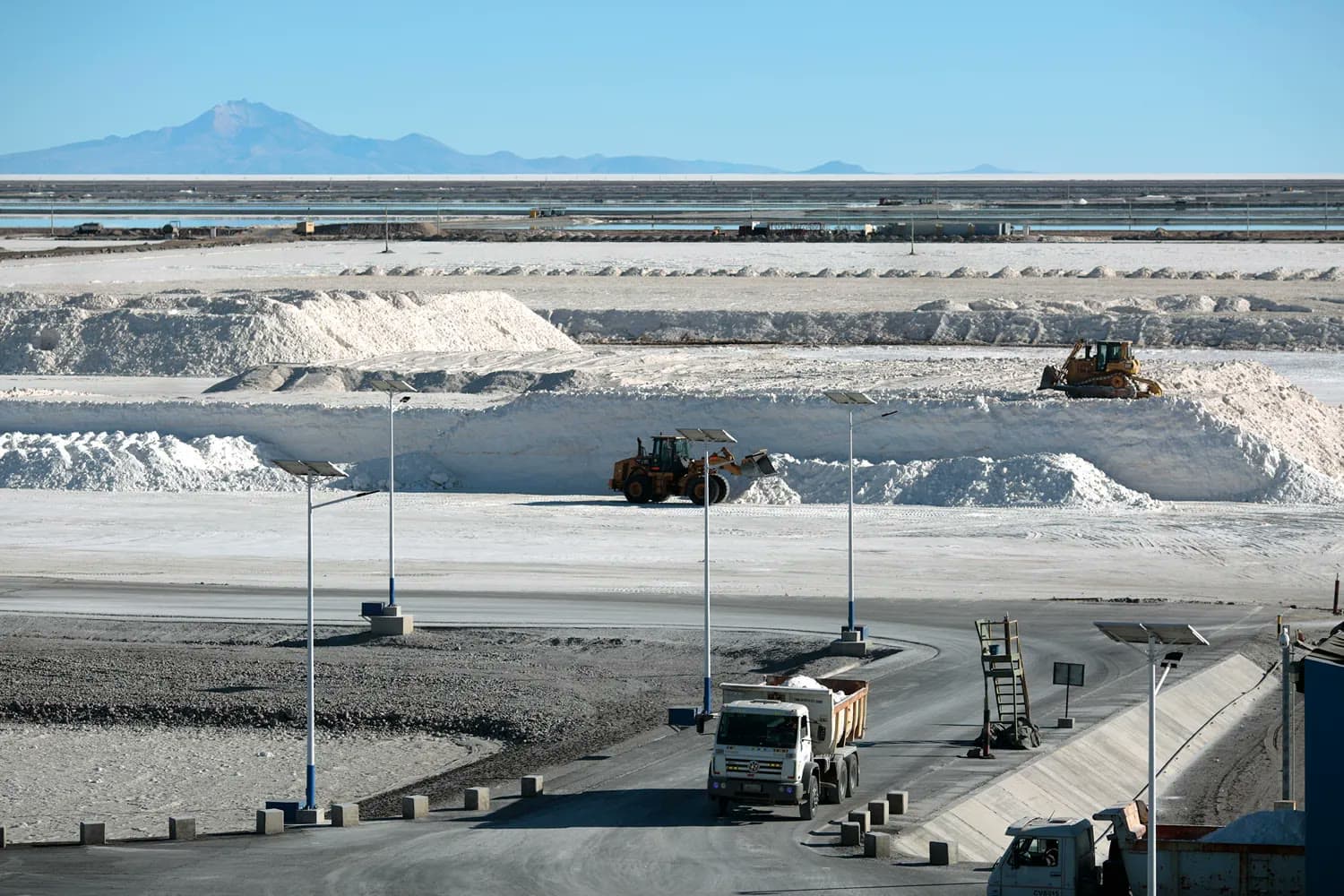
Bolivia sits atop roughly 20 percent of the world's known lithium deposits, mostly beneath the vast Salar de Uyuni salt flat, yet produces less than 1 percent of the world's lithium supply, a gap that newly inaugurated President Rodrigo Paz has staked much of his economic credibility on closing, according to journalist Nick Aspinwall reporting for Foreign Policy from Uyuni, Bolivia. Paz took office last year promising "capitalism for all" as the country moved away from two decades of left-wing rule, but he has been careful not to lead with lithium, promising not to "sell out" the salt flat and emphasizing its tourism appeal over its mineral wealth in campaign appearances and early meetings with U.S. officials and the IMF.
That caution reflects the depth of local opposition. Around Salar de Uyuni, families raise llamas and alpacas, grow quinoa, and increasingly work in tourism, and many fear lithium extraction could contaminate groundwater, deplete aquifers, and damage the tourism trade that many locals turned to after leaving farming. "We are the ones who are going to feel the impact," tour operator Edson Muraña told Foreign Policy. "We want this culture to exist. We don't want it to disappear."
Bolivian law from the era of the left-wing MAS party currently bars foreign companies from directly extracting lithium, forcing them to work through the state-owned Yacimientos de Litio Bolivianos. Changing that would require amending the constitution, which needs two-thirds support in the Legislative Assembly, something Texas A&M political scientist Diego von Vacano says Paz has the political capital to attempt with support from the parties of his two main rivals in last year's election. "It's something that has to be done very quickly," von Vacano said. "If he doesn't do that, investors will not go into Bolivia."
Complicating that path are existing, unapproved contracts YLB signed with Russia's Uranium One and China's CBC, a subsidiary of battery giant CATL, deals that have drawn criticism in Bolivia for their lack of transparency and terms seen as unfavorable to the government. Neither project has completed a legally required environmental impact assessment, leaving unclear where the large volumes of freshwater they would need might come from, said Gonzalo Mondaca of the environmental group CEDIB. "They never say, like, we are doing this. They just make the contracts, and that's it," said Jose David Valda Belen, who runs salt-flat tours through his company Quechua Connection 4WD, describing how the contracts have eroded local trust in the government.
Rather than cancel the deals outright, which EnergyX CEO Teague Egan warns "could undermine trust in contract stability and raise broader sovereign risk concerns," Paz's government appears more likely to try renegotiating them for greater transparency, pressure that Vice President Edmand Lara, who built a following railing against corruption on TikTok during the campaign, will be expected to help deliver. Advances in direct lithium extraction, the same method the Chinese and Russian projects would use, could help offset Bolivia's higher magnesium content compared with lithium deposits in Chile and Argentina; Egan's company recently reported a 94 percent recovery rate in a five-month Uyuni pilot. Still, Aspinwall's reporting makes clear the deeper obstacle isn't geology or even law, but trust: residents who watched Evo Morales promise to enrich Bolivia through state control of its resources are now watching a new government make similar promises, while asking where the money actually goes. "We don't see how much money we're getting from this," Valda Belen said. "It's still the same, the area is getting drier, and people are thinking about where they can get water."