
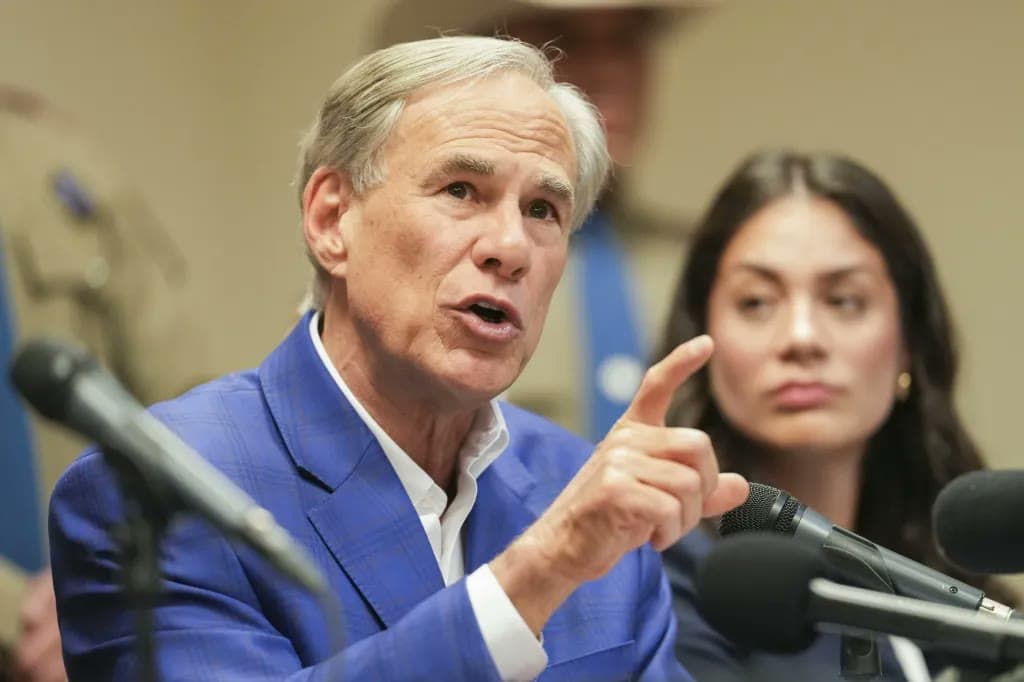
Texas Gov. Greg Abbott spent years branding his state the "epicenter" of AI investment, aggressively courting the data center industry as a cornerstone of that pitch. Now he is turning on the very companies he recruited, and clashing publicly with President Donald Trump over it, according to Fortune business editor Nick Lichtenberg. "They basically dug their own grave for the problem that's been caused for them, and that's why they got the backlash they deserve," Abbott said on ABC News' This Week, arguing developers rushed facilities into communities with little advance notice, fueling anger over electricity demand, water consumption, and neighborhood disruption.
The shift in tone has come with real regulatory teeth. Earlier this month Abbott directed the Public Utility Commission of Texas and the Electric Reliability Council of Texas to halt new grid-connection approvals for data centers until regulators complete what his office calls a "comprehensive verification and audit" of pending projects. The freeze is not a minor administrative pause: roughly 1,800 data center projects are now stalled, tied to interconnection requests totaling about 474 gigawatts, more than five times ERCOT's all-time peak electricity demand, with Abbott's office attributing roughly 90 percent of that demand to data centers, per Utility Dive and Yahoo Finance. Trump has publicly called Abbott's crackdown an economic "mistake."
The scale of what's now on hold is enormous precisely because Texas's data center pipeline turned out to be bigger than Wall Street had appreciated. An August 16 analysis by Apollo Global Management chief economist Torsten Sløk found Texas alone accounts for roughly 100 gigawatts of planned data center capacity, citing Cleanview data, more than the next two largest states, Virginia and Utah, combined. "The data center boom is a Texas story," Sløk wrote. That dominance is still mostly on paper, though: Virginia leads the country on capacity actually up and running, at 17 gigawatts, while Texas's far larger number reflects proposed projects, not built ones, which is exactly the gap Abbott's audit is aimed at closing.
Abbott now frames local buy-in as a prerequisite for future approvals. "Gaining the support of people in local communities is essential," he said. "If you're a data center and you want to operate in Texas, you have to first get the approval of those in local communities." That reflects a broader public mood: a Gallup survey this year found seven in 10 Americans oppose data centers being built in their local area, nearly half of them strongly; a July Emerson College poll put opposition at 63 percent, up 21 points since December 2025; and a June Reuters/Ipsos survey found only 14 percent of Americans said they'd be comfortable living near one. Some developers are already adjusting: Abbott's office says Power House Data Centers, CoreWeave, and Emergent Data Centers have agreed to comply with the new standards, at least one prospective project abandoned its plans rather than meet the requirements, and Abbott has held up a Meta-linked facility near El Paso, which sits outside the main ERCOT grid, as a model that intends to comply voluntarily.
Lichtenberg's reporting frames Abbott's reversal as part of a much wider political pattern, not a one-state story. In Ohio, former Democratic Sen. Sherrod Brown has spent millions branding Republican Sen. Jon Husted "the face of data centers," prompting the National Republican Senatorial Committee to privately warn AI companies that a Husted loss could chill industry support nationally. Pennsylvania's Democratic Gov. Josh Shapiro, who spent years courting Amazon, Microsoft, and Google investment, signed an executive order this month requiring local community approval before building permits are granted, after Republican challenger Stacy Garrity accused him of "rolling out the red carpet" for developers. More than 200 data centers are under construction or planned in competitive House districts, and eight states have already passed legislation this year rolling back data center tax subsidies, with 17 more considering it, according to the Center on Budget and Policy Priorities. Even Virginia, still the country's largest operating data center market, imposed a new energy consumption tax on data centers this year to help close a budget gap.
One AI industry advocate told Politico the mood inside the sector has curdled into what amounts to an "oh s—" moment: if Texas, the state that spent years selling itself as the industry's best partner, is turning cautious, developers elsewhere have little reason to expect an easier ride. For Abbott, the political logic is straightforward even if it puts him at odds with the White House: courting an industry now polling as broadly unpopular with the public he answers to carries a cost his allies from Ohio to Pennsylvania are already discovering firsthand.