
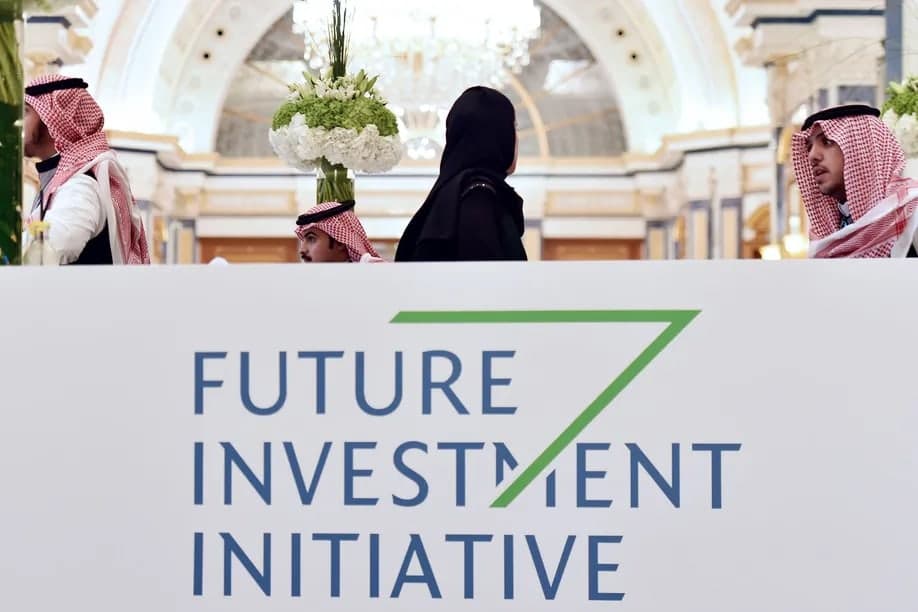
A wave of Houthi missile strikes on Saudi Arabia is reviving exactly the kind of security anxiety the kingdom has spent years trying to make foreign investors forget, just as Riyadh prepares to host its flagship Future Investment Initiative summit in under two weeks. A strike hit Saudi Aramco's headquarters in Dhahran on October 8, sparking a limited fire with no casualties, but it followed a far deadlier run of attacks on King Khalid International Airport in Riyadh, which was hit four times in five days. A Saturday strike there killed at least 13 people and wounded more than 300, making it the deadliest attack on Saudi soil in over a decade. The airport, which normally handles roughly 110,000 passengers a day, has been shut down through October 18.
The timing could hardly be worse for an event that depends on marquee attendance. The Future Investment Initiative typically draws Wall Street figures such as BlackRock's Larry Fink and Citigroup's Jane Fraser, and Saudi organizers are now weighing a hybrid format that would let executives join remotely rather than travel in person. Chief executives from several major energy companies, including Occidental, ConocoPhillips, BP, Shell, TotalEnergies, and ExxonMobil, have already been pulled from the published speaker list in the days since Saturday's attack.
A return of the security premium
Analysts say the strikes are forcing a repricing of risk that Saudi Arabia had largely shed since the kingdom opened up to foreign capital under its Vision 2030 plan. Andreas Krieg, a Middle East security analyst at King's College London, has described it as the return of a security premium — the kind of risk discount investors once baked into any Gulf project and that Riyadh had worked hard to erase. James Reeve, a Saudi macro consultant and former senior director at the Public Investment Fund, has warned that new foreign direct investment now faces significant headwinds as a result. The Wall Street Journal has reported that Crown Prince Mohammed bin Salman is being moved between fortified palaces amid the heightened threat. Saudi Energy Minister Prince Abdulaziz bin Salman has pushed back against the gloom publicly, insisting Vision 2030 must continue regardless of the security situation.