
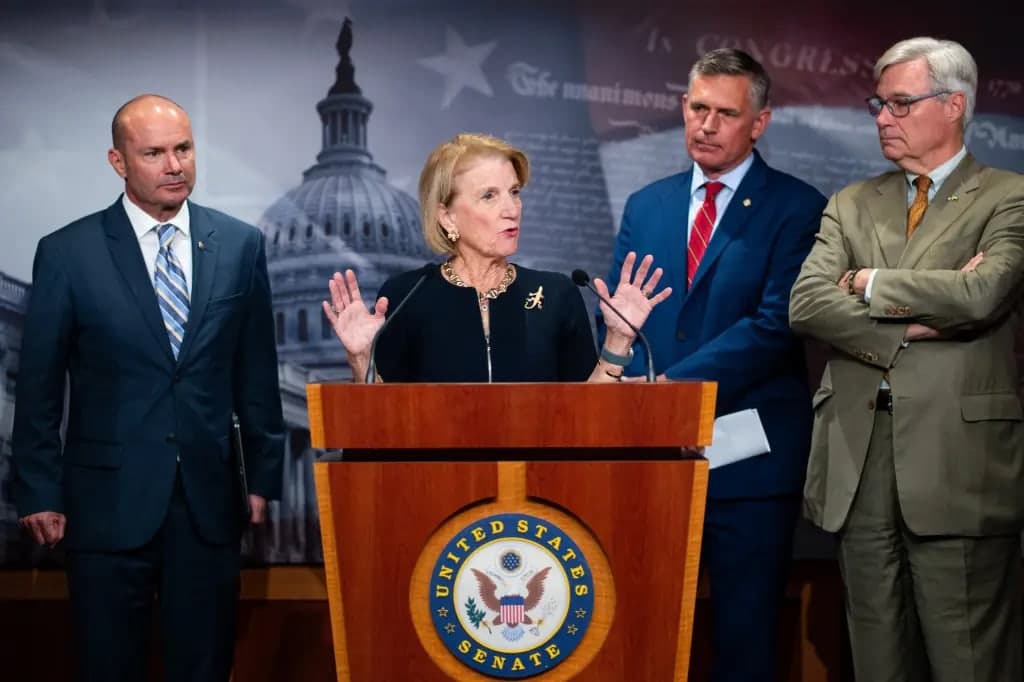
A bipartisan group of four senators is pushing legislation that would speed up federal permitting for energy projects of almost every kind, from solar farms and transmission lines to oil and gas pipelines, as the explosive growth of AI data centers pushes U.S. electricity demand to levels the grid hasn't seen in decades. The bill, known as the Bipartisan American Affordability and Jobs Act, comes from an unusual coalition nicknamed the "Four Corners" group: Sen. Mike Lee (R-Utah), Sen. Sheldon Whitehouse (D-R.I.), Sen. Martin Heinrich (D-N.M.), and Sen. Shelley Moore Capito (R-W.Va.).
The legislation would narrow the scope of environmental reviews required before construction can begin, confine legal challenges to federal rather than state courts, and make it harder for a sitting president to revoke permits already granted to a project. Backers say the changes apply evenly across energy types, meaning a wind farm or transmission corridor would clear the same streamlined review as a gas pipeline. The bill needs 60 votes to clear the Senate, and with lawmakers focused elsewhere, a floor vote is not expected before the November 3 midterm elections.
Industry says the grid can't wait
Energy developers on both sides of the fossil fuel-renewables divide have welcomed the push. Ben Norris, a senior vice president at the Solar Energy Industries Association, called the measure one of the strongest permitting packages the industry has seen in years. For solar and transmission developers, the appeal is less about politics than timelines: new power lines needed to connect wind and solar farms to the grid routinely take the better part of a decade to permit and build, a bottleneck that is becoming more costly as data center operators sign long-term power contracts and expect projects to come online fast.