
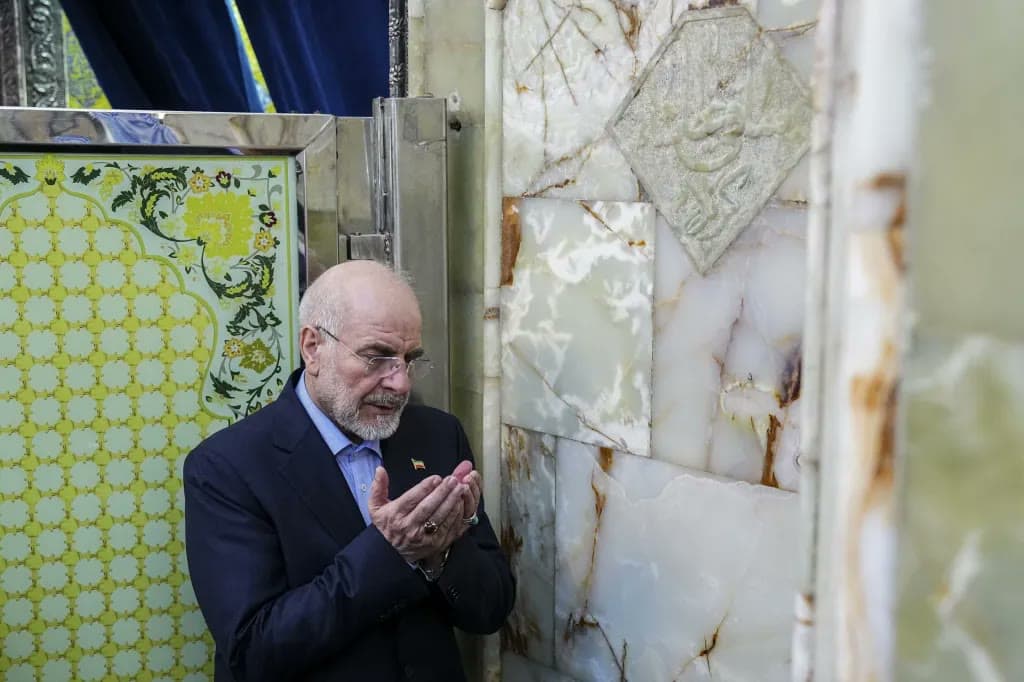
Senior Iranian officials are breaking with the regime's usual defiance to warn, in public and on the record, that the economy cannot absorb much more pressure, according to Fortune reporting by Jason Ma. Parliamentary speaker and chief nuclear negotiator Mohammad Bagher Ghalibaf told an audience in Iraq on Friday that military strength means little if ordinary Iranians go hungry: "No matter how strong we are militarily, if the people are hungry and we do not have financial circulation, economic growth and domestic production, we will not endure." In a pointed jab at the regime's hardline faction, he added, "As someone who has experienced war, we understand the true value of peace."
President Masoud Pezeshkian, who oversees Iran's economy, made a similar case the same day, pushing back on hardliner criticism that the ceasefire with Washington amounted to surrender. "It is better to end it today, as we are in a position of strength and dignity," he said, per state media, arguing Tehran holds leverage it needs to use before it disappears. Iran's central bank governor, Abdolnaser Hemmati, was even more direct about the toll of the U.S. naval blockade on state television this week: "It is a reality that we are not exporting oil. The Americans have frozen our foreign exchange reserves and do not allow us to access them."
The blockade is choking more than oil exports. Fortune reports it is also blocking critical imports into Iran, with the deputy head of the country's Energy Optimisation Organisation flagging fuel-import shortfalls that have forced the industry to draw down reserves in recent months. The United Arab Emirates' decision this week to impose a total embargo on trade and financial transactions with Iran, reported separately by Foreign Policy, adds another blow to a sanctions-battered economy already losing a longtime source of imports and financing. Iran's deputy foreign minister and the head of the Iran-China Joint Chamber of Commerce have both gone on record making the same argument: that the blockade's economic damage now threatens to outlast the war itself.
The numbers back up the alarm. Inflation has climbed past 80 percent, with some food staples up 100 percent, and the currency, whose collapse triggered nationwide protests late last year, has lost another 30 percent of its value in 2026. The IMF projected in April that Iran's economy will contract 6.1 percent this year, its worst downturn in decades, and a labor ministry official estimated more than 1 million jobs had already been lost by late May. Experts cited in the Fortune report caution that Iran's leadership has historically shown little responsiveness to public suffering and may be willing to absorb more economic pain than the American public is willing to tolerate at the gas pump.
That skepticism is reinforced by moves in the opposite direction at the top of Iran's government. Supreme Leader Mojtaba Khamenei has recently reshuffled the leadership to elevate hardliners who favor resuming war over accepting another ceasefire, and an adviser to Khamenei said Iran has shifted toward a more offensive military posture, favoring preemptive strikes to extract concessions rather than a purely reactive stance. Brig. Gen. Yadollah Javani of the Islamic Revolutionary Guard Corps told state media that "Iran's actions are defensive, although they may also take on an offensive aspect in the future." That posture comes as the U.S. is grappling with its own constraints: depleted munitions stockpiles and readiness concerns among the Navy ships positioned against Iran, even as Trump has so far avoided resuming all-out war despite what the administration has called an Iranian crossing of his "red line" in killing additional U.S. troops.
Rather than escalate militarily, Trump has pivoted to what he has billed an "economic D-Day" against Iran, promising an unprecedented level of economic warfare and isolation, though Fortune notes the details remain thin. Treasury Secretary Scott Bessent indicated the plan would center on secondary sanctions targeting any nation or company that continues doing business with Tehran. "If you insist on doing business with them, then the U.S. Treasury and U.S. government will put its full might and force against you," Bessent told CNBC. "It's time for our allies and the rest of the world to make a decision." With Iran's moderates publicly signaling they are running out of runway and its hardliners moving in the opposite direction, the coming weeks look likely to test whether economic pressure or military escalation wins out inside Tehran first.