
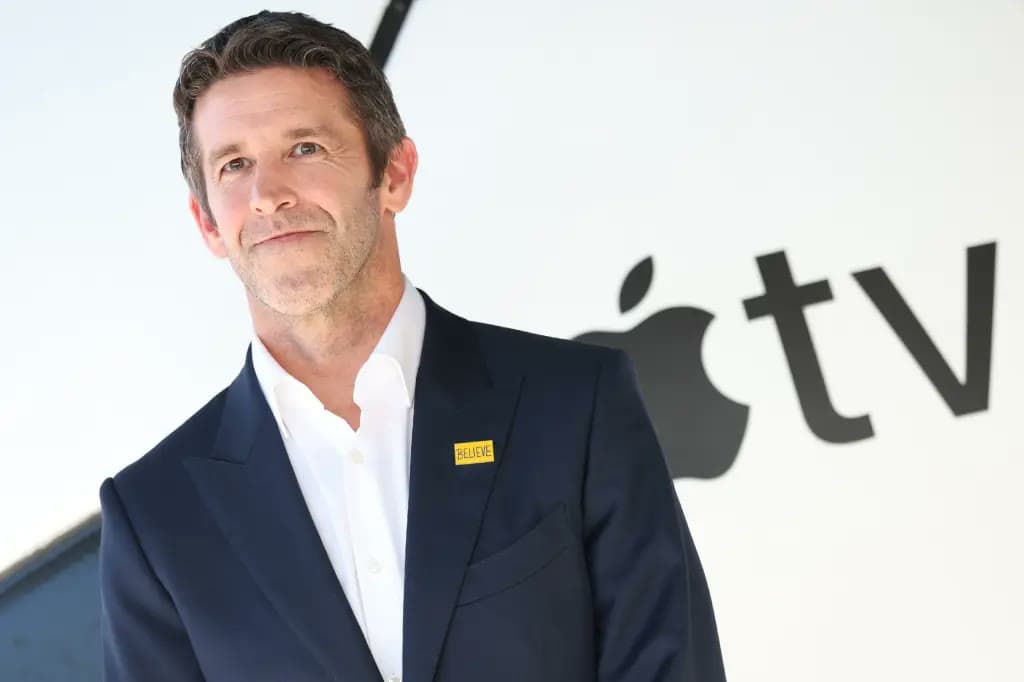
John Ternus took over as Apple's chief executive on Tuesday in one of the most closely watched succession handoffs in recent corporate history, but Tim Cook is not fully stepping back. In a memo to staff, Cook thanked colleagues for bringing out the best in him and praised Ternus as "brilliant and wonderful and capable," while confirming he will stay on as executive chairman, according to Fortune's Diane Brady. Cook's stated role going forward isn't ceremonial: alongside mentoring his successor, he will continue to "engage with policymakers and other external stakeholders on Apple's behalf," a division of labor Brady describes as unusual, but not undesirable, "in these tricky political times."
That framing matters because Apple's government-facing exposure hasn't gone away with the leadership change. The company remains deeply reliant on Chinese manufacturing even as Washington's tariff and export-control regime toward China has hardened across multiple fronts, the same pressure this site has tracked in U.S. semiconductor export controls on Nvidia, AMD, and Intel and in the broader U.S.-China trade standoff. Apple has also spent the past two years navigating a Justice Department antitrust suit over its iPhone ecosystem and compliance demands under the European Union's Digital Markets Act, two fronts where the company's chief executive has historically needed direct relationships with regulators and lawmakers, not just product strategy. Keeping Cook in the room for those conversations, rather than handing them to a first-time CEO, reads as a hedge against exactly the kind of policy exposure that has little to do with engineering.