
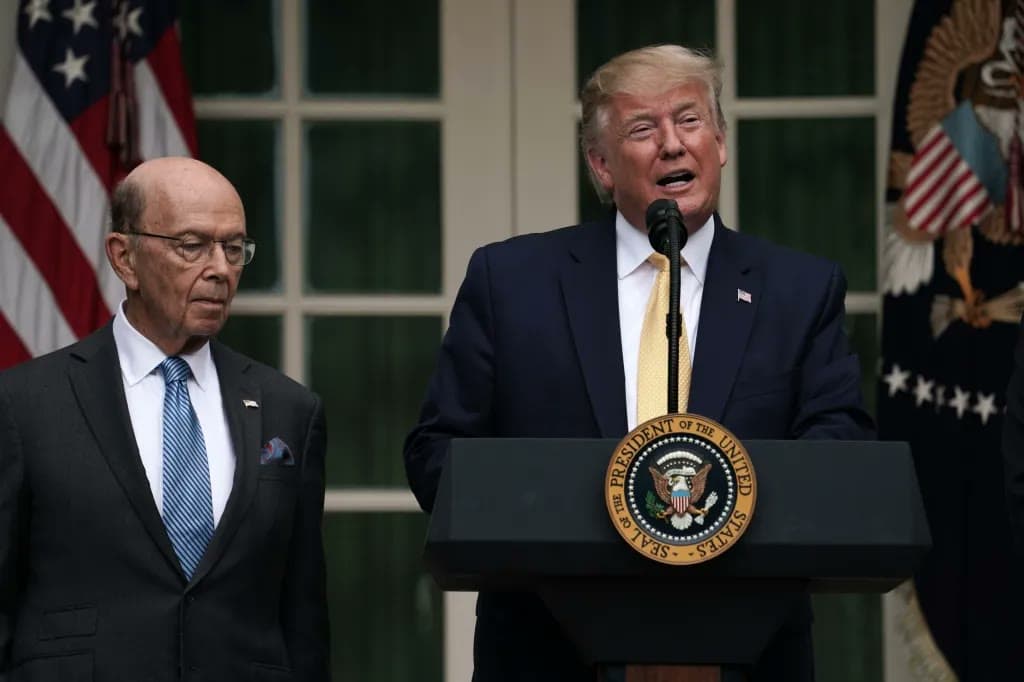
Former U.S. Commerce Secretary Wilbur Ross says the real obstacle stalling U.S.-Canada trade talks isn't the substance of what's on the table, it's how much Canadians have come to resent Washington. "The Canadians have adopted a very negative attitude toward the U.S. in general, and we can argue, is that justified? Is it not? It doesn't matter. There's been a real sea change [and] that's gonna be a complication because, almost independently of whatever proposal the U.S. might make, there's probably a political advantage to people in Canada who oppose it," Ross told Fortune's Eleanor Pringle in an exclusive interview.
That shift in sentiment has an obvious source. Canadian press reported last week on leaked audio of Vice President J.D. Vance at a private function mocking Prime Minister Mark Carney as both "sweet" and "hilarious," reportedly saying Carney "comes in and puffs his chest out and says, 'I'm going to, like, out-tough Donald Trump.'" Trump himself has kept up a parallel stream of insults aimed at Ottawa, repeatedly calling Canada the "51st state" and floating renaming Lake Ontario to "Lake America," the same rhetorical move he used against Mexico during earlier negotiations.
Ross argues the sovereignty needling is calculated rather than careless. "[Trump] sometimes speaks metaphorically, and I think what was at the core of the 51st state was another way of articulating Canada's dependence on the U.S.," he said. "Just mechanically, how would we ever do that? If you put it up for a plebiscite, at least at present, I don't think there's any chance the Canadian public would vote for it. Would you invade them? I don't see it." In his telling, the point isn't annexation, it's reminding Canada how much leverage the U.S. actually holds.